
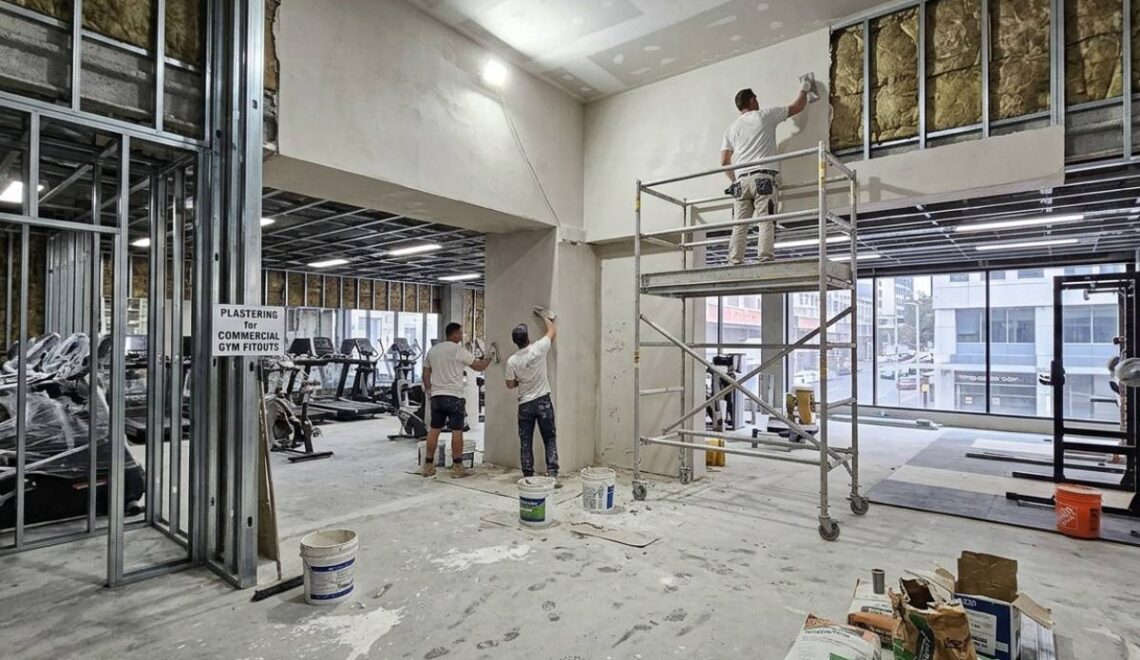
A commercial gym sees roughly 300 to 500 members per day pushing through high-intensity sessions in a space where humidity spikes, sweat aerosols settle on every surface, and rubber-coated plates get dragged along walls. According to the Australian Bureau of Statistics (via Statista), there were 7,313 health and fitness centres in operation in Australia in 2024, and every one of them has walls. Most of them have the wrong walls.
Standard commercial plasterboard and off-the-shelf paint fail in this environment. They absorb moisture, harbour mould, scuff within months of opening, and trap owners in a cycle of patch-and-repaint that quietly drains operating budgets. The financial stakes are real: commercial gym fitout costs typically range from $1,500 to $3,000 per square metre depending on equipment quality and facility design, which makes surface failures expensive to fix after the fact.
This guide covers how to specify plastering and painting systems for a commercial gym fitout zone by zone: which plasterboard types apply where, which paint coatings hold up under real conditions, what Australian compliance standards govern the work, and how to evaluate a contractor who actually knows this trade. Get these decisions right before the first stud is fixed and you avoid rework that no fitout budget has room for.
Why Gym Walls Demand More Than Standard Commercial Spec
A standard commercial office runs at roughly 40–60% relative humidity. A commercial gym training floor during peak hours can push that to 80% or higher, particularly in spaces without adequate HVAC. That sustained humidity is enough to cause standard gypsum plasterboard to swell, soften, and delaminate at joints over time.
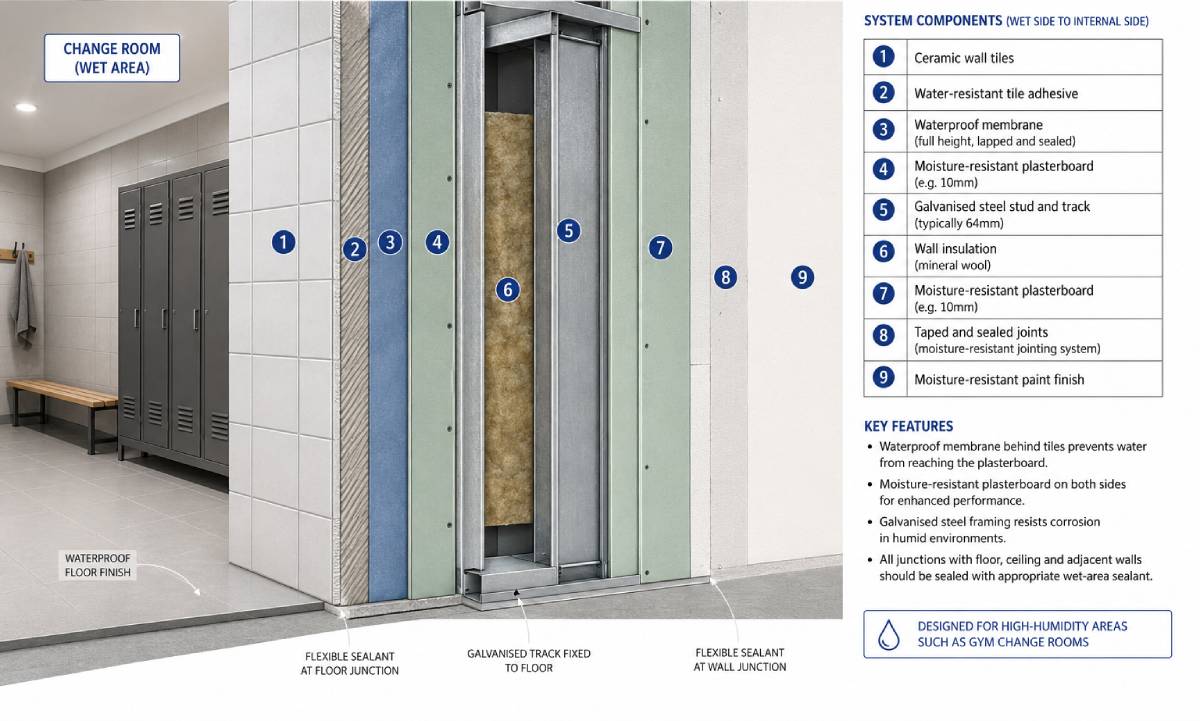
The problem compounds in wet zones. Change rooms, showers, and pool areas within gym facilities are legally classified as wet areas under the Building Code of Australia (BCA). The BCA’s performance-based code, published by the Australian Building Codes Board, includes specific waterproofing requirements for wet-area wall and ceiling plastering in commercial buildings (Class 2 to 9), with requirements found in Part F.17 of Volume 1, which stipulates the areas in which waterproofing is required and the water-resistant materials that must be installed.
Beyond moisture, the training floor presents a different problem: physical impact. Free weights, cable attachments, and barbell collars regularly contact walls. Standard 10mm plasterboard does not withstand repeated impact without cracking or denting, which creates repair cycles that compound over a facility’s life.
Zone-by-Zone Plasterboard Selection
Not every square metre of a gym is the same. The training floor, change rooms, reception, amenities, and plant areas each carry different moisture, impact, fire, and acoustic loads. Specifying a single plasterboard type across the whole facility is the most common mistake on gym fitouts.
When choosing plasterboard for high-humidity commercial areas, the main options include cement backer boards (highly durable, designed for areas frequently exposed to water), green boards (wax-coated core for moderate-humidity spaces like restrooms), and specialist moisture-resistant systems with antimicrobial additives that stop mould and bacteria growth.
Australia’s National Construction Code (NCC 2022) includes wet-area provisions to protect occupants and the building from moisture damage, making compliant system selection mandatory rather than optional.
The table below maps the primary gym zones to the appropriate plasterboard specification:
| Gym Zone | Moisture Risk | Impact Risk | Recommended Board | Key Standard |
| Training Floor (walls) | Moderate (humidity) | High | Impact-resistant MR board (16mm) | AS/NZS 2589:2017 |
| Change Rooms | High (humidity) | Moderate | Moisture-resistant (Gyprock Aquachek or equivalent) | NCC Part F.17 |
| Shower / Wet Areas | Very High (direct water) | Low | Cement backer board (Villaboard or equivalent) | BCA + AS 3740 |
| Reception / Lobby | Low | Low | Standard 13mm plasterboard | AS/NZS 2589:2017 |
| Plant / Mechanical Rooms | High (steam / wash-down) | Moderate | Villaboard with acrylic sealant overlay | BCA Part F.17 |
| Fire-rated Walls / Exits | Low | Low | Fire-rated Type F board (Fyrchek or equivalent) | AS 1530 / BCA |
Training Floor Walls
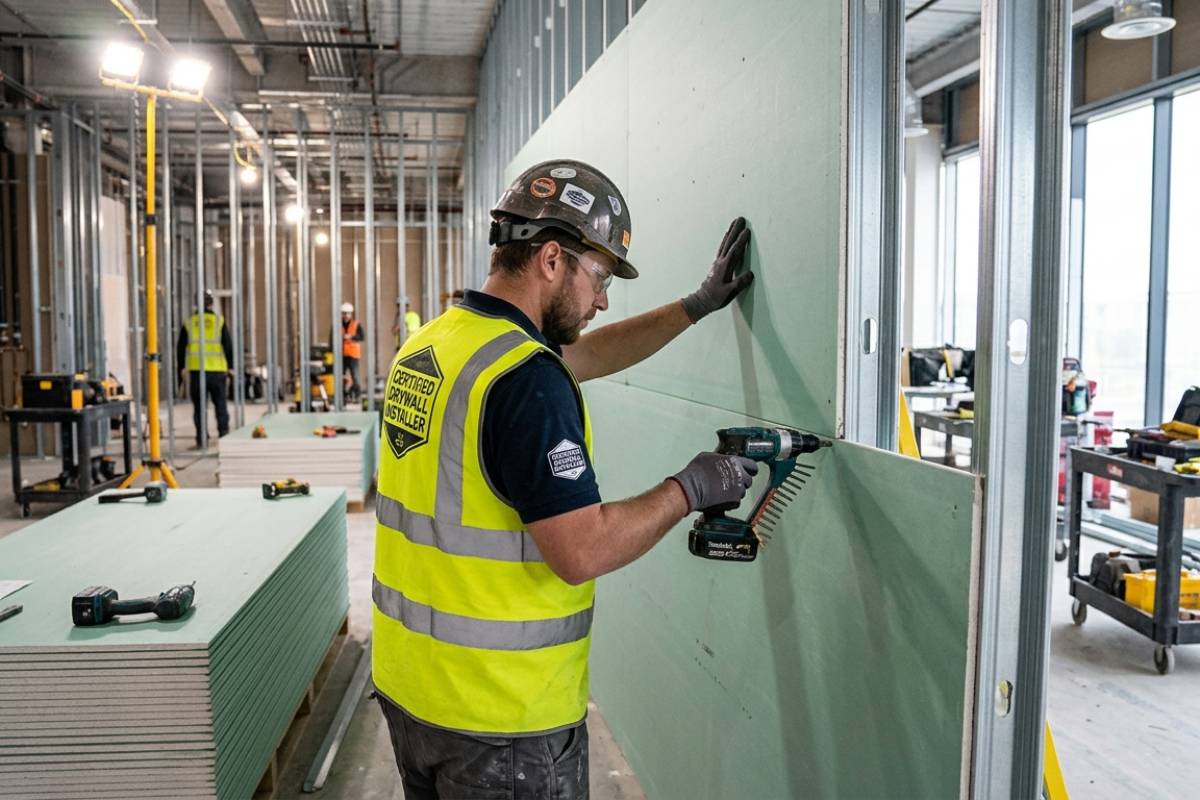
The training floor is where impact load and humidity combine. Standard thicknesses in Australia are 10mm for walls, 13mm for ceilings, and 16mm for commercial or high-performance applications. On a gym training floor, 16mm impact-resistant MR board is the minimum viable spec. Fit it at the standard 600mm stud spacing and check that framing is fully plumb before sheeting, as any deviation becomes visible under raking light once painted.
Fix heights matter here, too. If the gym will have wall-mounted cable rigs, battle ropes, or mirror frames, the framing behind the plasterboard must be engineered to carry those point loads. No plasterboard system is load-bearing on its own.
Change Rooms and Wet Areas
The core and surfaces of moisture-resistant plasterboards are treated to resist water without compromising integrity, with special additives used to enhance moisture resistance. These boards undergo submerging tests (two hours in water for core testing) and surface exposure tests to achieve certification.
In shower areas, MR plasterboard alone is insufficient. A compliant waterproof membrane must be applied over the board before tiling, per AS 3740. The plasterboard is a substrate, not a waterproofing layer. Any contractor who treats it as the latter is out of spec.
Finish Levels: The Australian Standard That Applies
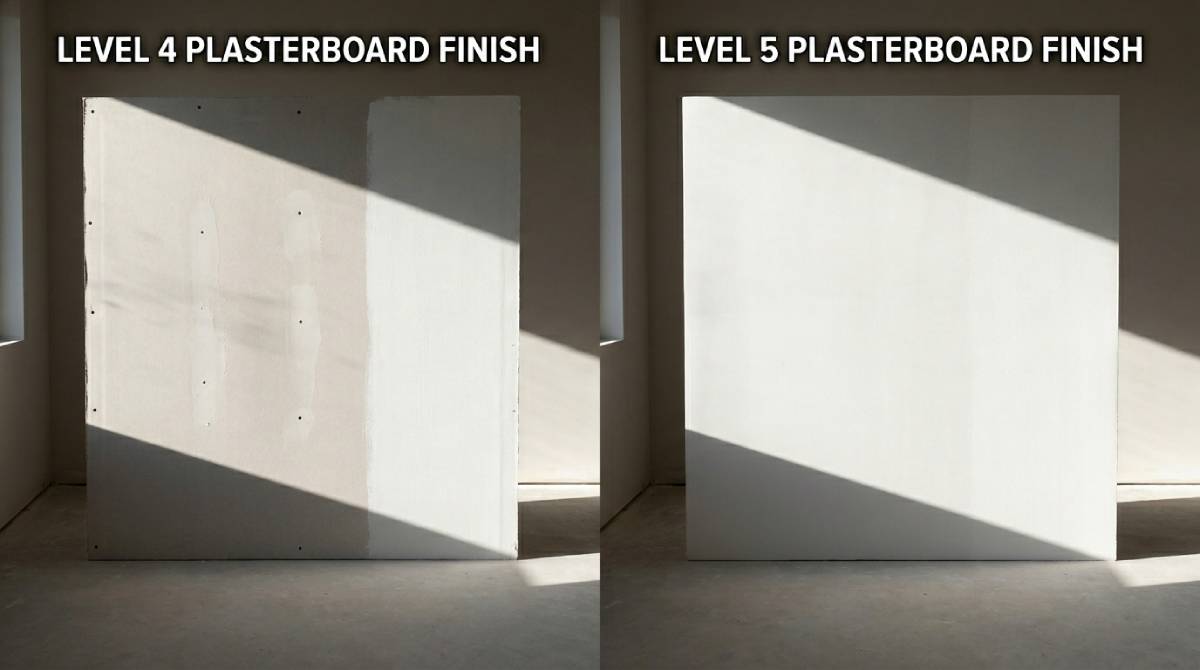
Once boards are fixed and set, the finish level determines how well the final painted surface holds up aesthetically and functionally. A Level 4 finish is the Australian Standard for painted walls where a finish level is not otherwise specified. For surfaces that will receive gloss paint or dark colours, a Level 5 finish is recommended, because high-gloss finishes and dark paints highlight any imperfections in the plasterboard wall, especially under glancing light.
For a commercial gym, this has practical implications. Training floors often use dark, high-contrast colour schemes for branding. Dark-painted walls in a space with strong overhead lighting will expose every joint, trowel line, and bugle if the finish is only Level 4. Specify Level 5 on any wall receiving dark or semi-gloss paint.
The AS 2311 requirements apply to paint finishes in all interior situations, including areas with high levels of moisture. Deviating from the standard can result in issues such as gloss banding, where plasterboard joints show a variability of gloss level compared to the overall surface.
Level 5 costs more in labour. It requires an additional skim coat, more sanding, and longer drying time. On a gym fitout running a tight programme, that drying time is non-negotiable. Rushing it produces gloss banding that will be visible to members every session.
Paint Systems That Survive a Gym Environment
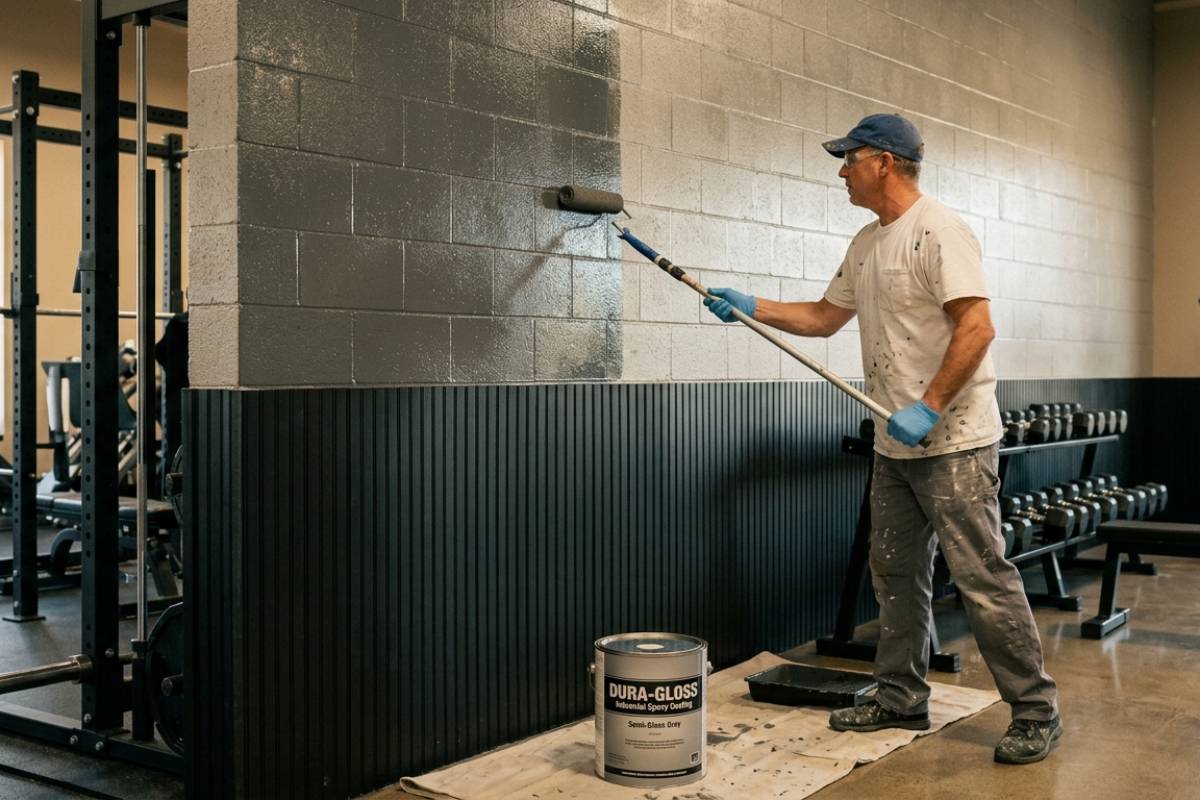
Paint selection is where most gym fitouts cut corners and pay for it within 18 months. The enemy in a gym is not just moisture: it is the combination of moisture, sweat aerosols, cleaning chemicals, and physical contact.
Training Floor: Semi-Gloss Washable Systems
Gym and wellness studios require moisture-tolerant, washable finishes that handle sweat and regular cleaning. A 100% acrylic semi-gloss in two full coats over a sealed primer system is the baseline specification. The semi-gloss sheen provides enough surface tension to resist absorption of sweat and cleaning products, while still being wipeable without damaging the film.
Flat and low-sheen paints look better in photographs but are functionally wrong for training areas. They absorb rather than repel, and they cannot withstand the scrubbing required to maintain a commercial gym’s hygiene standard. If the fitout brief calls for matte walls for aesthetic reasons, the compromise is a high-quality, washable matte product rather than a standard interior flat.
Change Rooms and Shower Surrounds
For tiled change rooms, paint is applied to ceilings and non-tiled upper walls only. Here, an anti-mould, moisture-resistant acrylic paint system is required. The ceiling above a shower alcove will saturate with steam daily. Standard acrylic paint with no mould inhibitor will show fungal staining within one season.
Confirm the paint manufacturer’s data sheet lists anti-fungal additives specifically for high-humidity commercial applications. “Bathroom paint” from a residential product range is not an equivalent.
Reception and Lobby
Reception walls in a commercial gym carry a different brief from the training floor, and the choice between light and dark tones connects directly to how paint colour affects perceived space, particularly in smaller lobbies where members form their first impression of the facility. A premium flat or low-sheen acrylic in two coats is appropriate here, given that this zone does not face humidity or impact loads. Colour selection should align with the gym’s brand palette, and a Level 4 finish is sufficient unless dark or high-gloss colours are specified.
Acoustic and Fire Compliance
Commercial gyms generate significant noise: music systems running at 85 to 95 dB, dropped weights, and group fitness classes. If the gym occupies a tenancy within a mixed-use building (which is common in urban fitouts), acoustic separation between the gym and neighbouring tenancies is not optional.
In Australia, commercial plastering in commercial buildings must comply with the National Construction Code for fire safety, including correct Fire Resistance Levels (FRL). Fire-rated plasterboard is mandatory in fire walls, stairwells, and escape routes. Installation must be precise, with correct screw spacing, joint sealing, and insulation. AS/NZS 2589 complements fire standards by providing guidelines on how to install systems to maintain their FRL.
For acoustic performance, plasterboard system selection must specify Rw + Ctr values for any shared walls. Double-layer plasterboard on staggered studs with acoustic insulation batts is the most common compliant system for party walls between a gym and an adjacent retail or residential tenancy.
Non-compliance with fire standards risks occupant safety and can result in major legal and financial penalties. For gym fitouts specifically, this matters at the entry/exit corridors, plantrooms, and any back-of-house areas adjacent to means of egress. These zones must use fire-rated board installed precisely according to the manufacturer’s certified system, not substituted for standard board to save material cost.
Trade Sequencing Within the Fitout Timeline
Plastering and painting are middle-of-programme trades, but they control the handover date. Both trades depend on prior works being complete, and both create delays for the trades that follow them if they slip.
The plastering scope cannot begin until framing, electrical rough-ins, and plumbing are signed off, which is why understanding the full sequence of commercial site preparation work matters before a fitout programme is locked.
Commercial plastering should be sequenced so that framing, electrical rough-ins, and plumbing are complete before plastering begins. Adequate drying time for compounds must be allowed, especially for Level 5 finishes. Fast-tracking finishes in cold or damp conditions leads to failures. Plaster must be fully dry and cured before paint is applied.
The practical schedule for a mid-size commercial gym fitout (500 to 1,000 sqm) typically works as follows. Framing and rough-in take two to three weeks. Plasterboard fix, set, and sand takes one to two weeks. Allow a minimum of five to seven days for compound cure before paint primer is applied. Painting takes two to four days, depending on the number of coats and zones. Do not begin mirror and equipment installation until the paint is fully cured (typically 24 to 48 hours after the final coat in controlled conditions).
Moisture in the air extends every drying time. If the fitout is happening in a humid Queensland summer or before HVAC is operational, add a buffer. Rushing drying produces finish failures that are visible after opening day.
How to Evaluate a Contractor for This Work
The correct question to ask a plastering and painting contractor is not “Can you do commercial work?” It is “Have you done gym or high-humidity commercial fitouts, and can you show the specification you used?”
A competent contractor will be able to name the plasterboard system by product (Gyprock Aquachek, James Hardie Villaboard, or equivalent), specify the finish level they will deliver and how they will achieve it, and confirm their compliance with AS/NZS 2589:2017. Pro Plaster N Paint in Sydney, a specialist commercial plastering and painting team with hands-on experience across high-humidity fitout environments, including gyms, change rooms, and wet areas. That kind of trade partnership matters in a gym fitout because the contractor already understands the compliance requirements before the brief lands on their desk.
Ask for that warranty in writing with specific coverage terms. A verbal assurance is not a warranty. Also, confirm the contractor is licensed under the relevant state authority (Queensland Building and Construction Commission in QLD, NSW Fair Trading in NSW, etc.), and request current public liability and workers’ compensation certificates of currency before work begins.
For painting, the key qualification is experience with moisture-resistant coating systems in commercial settings. Ask for a paint specification document that identifies the primer, undercoat, and topcoat by manufacturer and product name. Generic answers like “we use a good quality acrylic” are a red flag on a project of this type.
Conclusion
Plastering and painting for commercial gym fitouts is a compliance and performance problem before it is an aesthetic one: choose the wrong board for a wet area and you are facing mould, structural damage, and a BCA non-compliance before your membership numbers hit target. Specify the right plasterboard system zone by zone, apply a washable and moisture-resistant paint system to AS 2311 standards, sequence the trades correctly, and engage a contractor who can provide written specifications and a documented warranty. Get those four things right and the walls will outlast the equipment.